
 Log In
 Register



Schools across England have until September 2026 to make sure their curriculum includes the latest RSHE requirements. See below for a list of some key changes that you should implement very soon. This overview is by no means exhaustive but gives an idea of the kind of changes to expect.
What is RSHE?
RSHE encompasses relationships, sex and health education. The Department for Education made them statutory teaching as of September 2020, after being introduced under the Children and Social Work Act 2017. This made it compulsory for:
- Relationships Education to be taught in all primary schools (key stages 1 and 2).
- Relationships and Sex Education (RSE) to be taught in all secondary schools (key stages 3 and 4).
- Health Education to be taught in all state-funded schools (key stages 1 to 4).
Though these subjects were included in most school curriculums before they were compulsory — as part of PSHE (Personal, Social, Health and Economic) education — there has been a greater emphasis in their focus and how they are taught in the last few years.
What is Required?
The Department for Education’s updated guidance for RSHE will replace the 2019 guidance. Many schools have already been teaching these new requirements for a while now, but we’ve provided a rundown of some key updates for you to consider:
Primary Schools (key stages 1 and 2)
Families and Relationships:
- Knowing about the needs and preferences of all involved in relationships. Learning how to express needs and preferences.
- How to set boundaries and respect the boundaries of others.
- Conflict resolution and assertive communication, being kind and respectful.
- Managing feelings within relationships, including disappointment and frustration.
- Learning about mutual respect with others. Understanding the importance of behaving respectfully, including towards those who are different either physically or by personality, beliefs etc.
- Awareness of the different types of bullying and how to act if bullying is witnessed.
Online Safety and Wellbeing:
- More attention to be devoted to learning about online financial dangers, specifically when it comes to game monetisation, scams and fraud.
- Understanding the reasons for age restrictions on certain websites and apps e.g social media and gambling sites.
- Helping students to critically evaluate online interactions and relationships. This includes awareness of the risks involved when connecting with strangers.
- Learning how to recognise and report harmful content or contact.
- Being vigilant when sharing personal information and making intimate details public. Understanding how to use privacy and location settings to stay safe.
- Knowing where to seek advice and support if affected by something upsetting they experienced online.
Health and Wellbeing:
- How and where to seek help for loneliness and how isolation and loneliness can affect children.
- How change, loss and bereavement can cause a range of feelings and that grief is a natural response to bereavement, that everyone experiences in a different way.
- Personal safety when it comes to recognising and reducing risk of fire and travel safety e.g. around water, roads and railways.
- The ways the body changes and develops as we grow and reach adolescence.
- Learning correct names for body parts including genitalia with the understanding that these parts of the body are private.
Secondary Schools (key stages 3 and 4)
Online Safety and Awareness:
- Exercising caution when using social media, realising that not everyone or everything posted is ‘real’, especially with the improvements in AI technology. This includes imagery, like ‘deepfakes’, as well as AI generated text.
- Teaching pupils that content encouraging misogyny, violence or illegal activity has to be reported and should not be normalised or glamorised in any way.
Mental Wellbeing:
- Different types of mental health disorders and mental illness. Careful consideration should be taken for how to address mental health topics in a way that encourages normal feelings not to be labelled as mental health disorders.
- How gambling can lead to anxiety and other serious mental health conditions like depression and suicide.
Personal Safety:
- As well as for primary schools, also an emphasis on recognising and reducing risk in the context of fire and travel safety e.g. around roads, railways (including level crossings) and water.
- Addressing violence, knife crime and the law as it relates to knives and violence.
- Developing skills for conflict resolution and avoiding violent situations.
- Recognition of financial exploitation and staying safe in regards to scams, fraud and extortion.
- The dangers and signs of grooming, exploitation and ‘sextortion’. and where to get help.
We provide a number of workbooks and lesson plans that cover many of the topics taught in PSHE and RSHE. See some of these below.
PSHE Lesson Plans
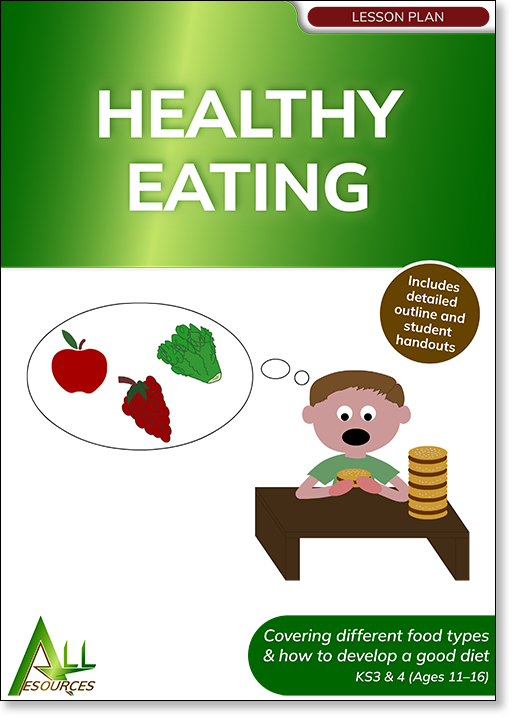
Healthy Eating
Lesson Plan
This lesson plan covers healthy eating, different food types and how to develop a healthy diet.
- Published: 2019
- Last revised: 2021
- Pages: 15
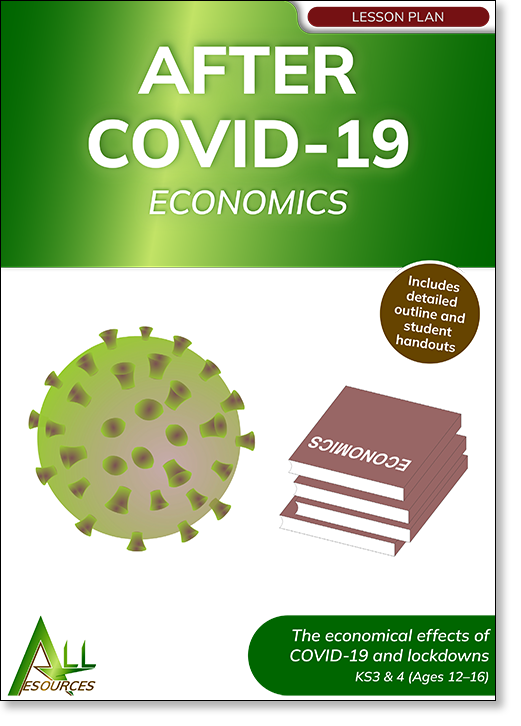
After COVID-19 — Economics
Lesson Plan
This lesson plan deals with the economical effects of COVID-19, furlough schemes and employment issues during the lockdown.
- Published: 2020
- Last revised: 2022
- Pages: 15
After COVID-19 — PSHE
Lesson Plan
The personal, social, health and educational issues of COVID-19 are examined in this lesson plan.
- Published: 2020
- Last revised: 2021
- Pages: 13
Bullying and Cyberbullying
Lesson Plan
This lesson plan covers how to deal with bullying and cyberbullying and contains handouts for the classroom.
- Published: 2019
- Last revised: 2021
- Pages: 15

Price: £0.79 Now: £0.32
Bullying
Lesson Plan
This covers bullying, the types of bullying, the bully, the target and how to tackle bullying.
- Published: 2019
- Last revised: 2021
- Pages: 13
Price: £2.99 Now: £0.32
Exam Stress
Lesson Plan
This lesson plan provides information and advice on dealing with exam stress.
- Published: 2022
- Pages: 17
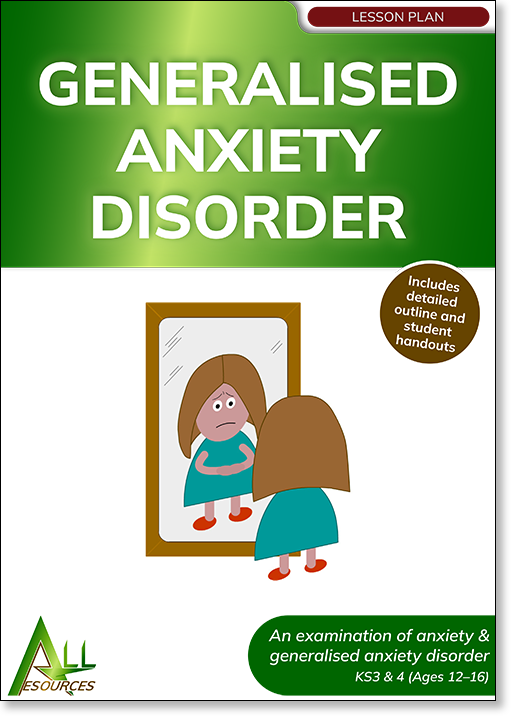
Generalised Anxiety Disorder
Lesson Plan
A lesson plan examining teenage anxiety and generalised anxiety disorder — a more extreme form of anxiety.
- Published: 2022
- Pages: 14
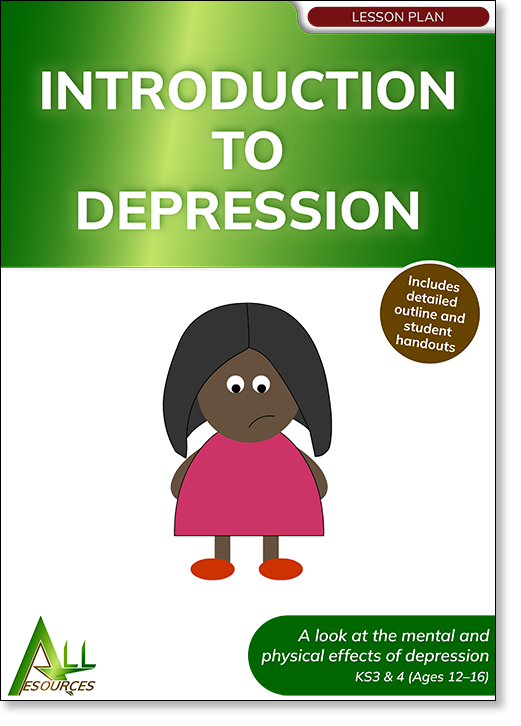
Introduction to Depression
Lesson Plan
This lesson plan introduces depression and the way it affects us physically and mentally.
- Published: 2022
- Pages: 14
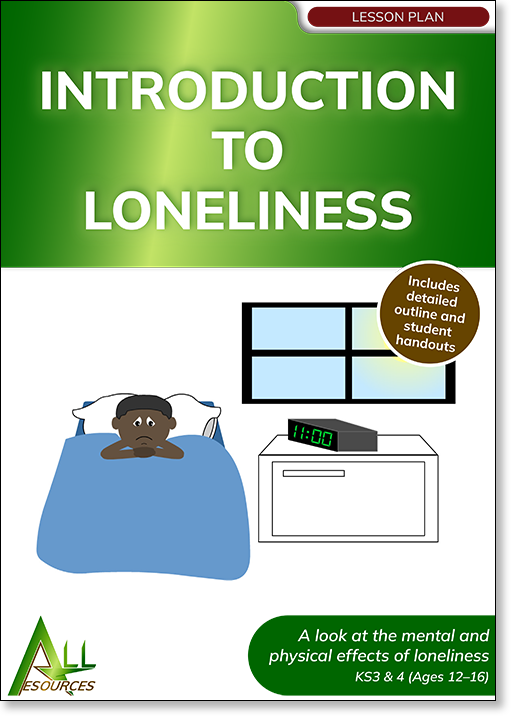
Introduction to Loneliness
Lesson Plan
An introduction to loneliness and the way it affects our physical and mental health.
- Published: 2022
- Pages: 15
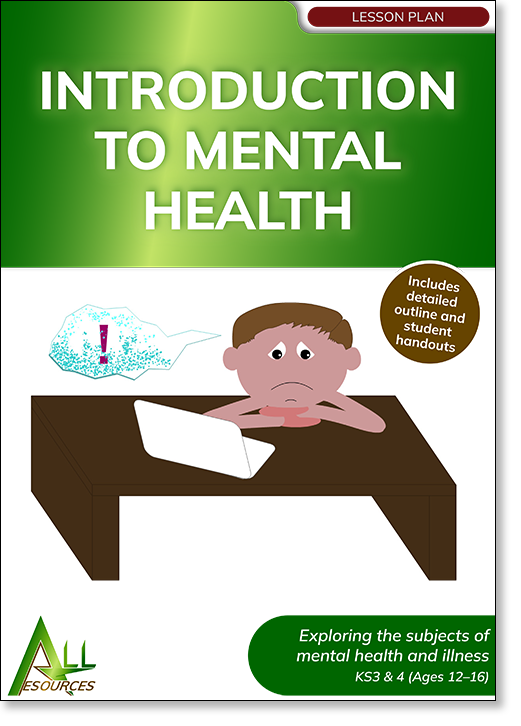
Introduction to Mental Health
Lesson Plan
This lesson plan introduces the subject of mental health and mental illness.
- Published: 2022
- Pages: 15
Netiquette
Lesson Plan
A lesson plan on netiquette and the different ways of behaving online.
- Published: 2022
- Pages: 10
Phishing Scams
Lesson Plan
A lesson plan on phishing and the different types of phishing scams used online.
- Published: 2021
- Last revised: 2022
- Pages: 15
Playground Bullying
Lesson Plan
A lesson plan on playground bullying, the issues caused and addressing the topic.
- Published: 2022
- Pages: 17
Price: £0.79 Now: £0.32
Safety in Cyberspace
Lesson Plan
This lesson plan examines the dangers of the internet and how to stay safe on the web.
- Published: 2019
- Last revised: 2022
- Pages: 14
Price: £0.79 Now: £0.32
Suicide Prevention
Lesson Plan
A lesson plan designed to promote suicide awareness and prevention.
- Published: 2022
- Pages: 21
PSHE Workbooks
Families and Relationships
School Workbook
This pack deals with relationships, families & step-families, parent/child relationships, dating, marriage and single-parent families.
- Published: 1999
- Last revised: 2020
- Pages: 50
Suicide Awareness and Prevention
Information Pack
Covers suicide from a variety of perspectives, the reasons behind suicide, the groups most at risk and the warning signs.
- Published: 2022
- Pages: 61
Bullying — A Complete Approach
School Workbook
Contains hints and tips for teachers, parents and young people to enable them to identify and tackle bullying.
- Published: 1999
- Last revised: 2022
- Pages: 94
Price: £5.69 Now: £2.28
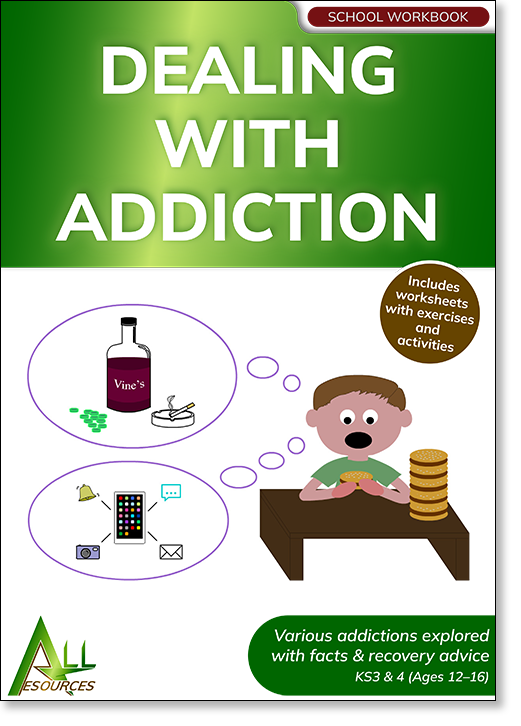
Dealing with Addiction
School Workbook
Providing the facts about substance abuse, gambling, gaming & other psychological addictions. Addresses ways to help people recover from addiction.
- Published: 1999
- Last revised: 2021
- Pages: 83
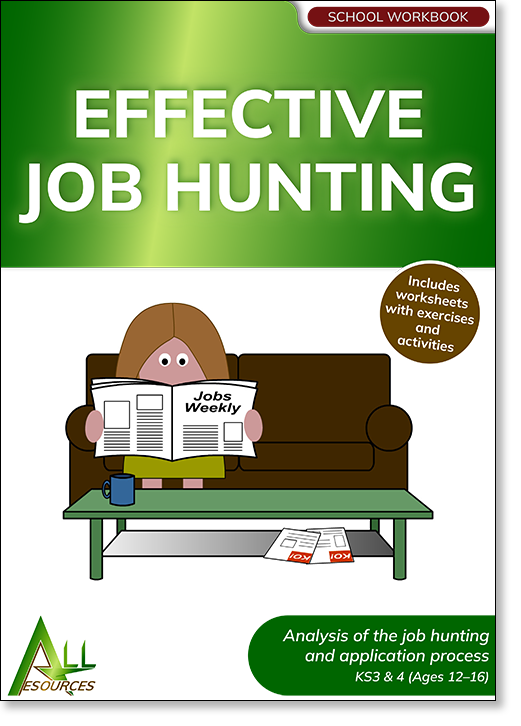
Effective Job Hunting
School Workbook
Examining the job hunting process including career decisions, contacting agencies, job centres etc.
- Published: 1999
- Last revised: 2020
- Pages: 90
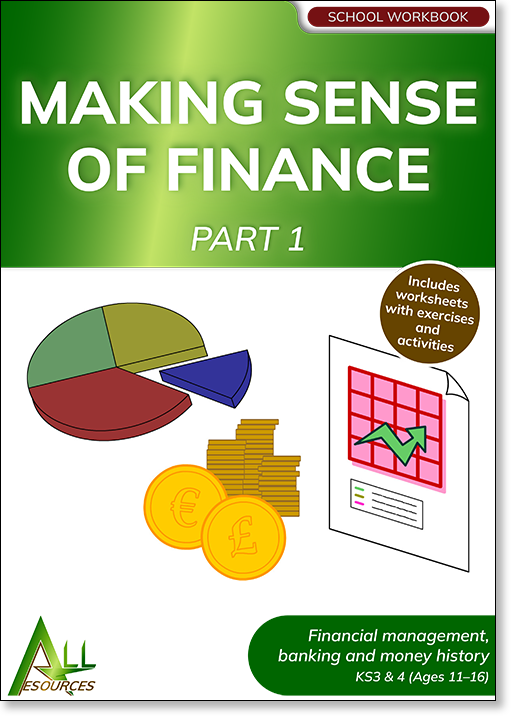
Making Sense of Finance — Part 1
School Workbook
Covering the history of money, how to make money work for you, managing money, budgeting, saving & borrowing and banking.
- Published: 1999
- Last revised: 2022
- Pages: 57
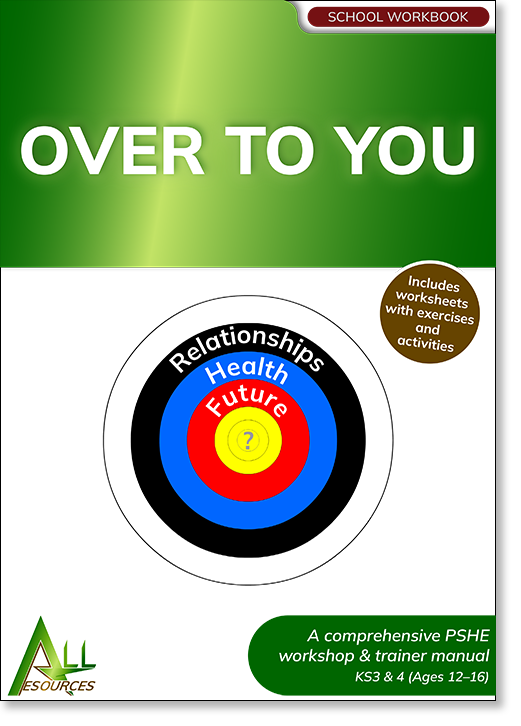
Over to You
School Workbook
A valuable PSHE workshop covering self-esteem, motivation, confidence, assertiveness skills, self-awareness and other topics. Contains a comprehensive trainer manual, worksheets, presentation sheets and infosheets.
- Published: 2020
- Last revised: 2022
- Pages: 190
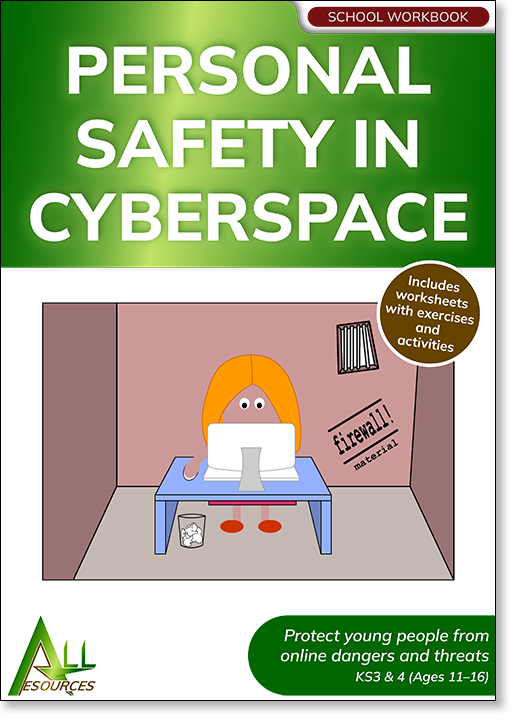
Personal Safety in Cyberspace
School Workbook
This pack looks at the dangers of online grooming, malicious software, webcams, cyberbullying and scams.
- Published: 1999
- Last revised: 2023
- Pages: 73
Price: £4.19 Now: £1.68
PSHE Activities
School Activities
A set of activities and topics for discussion including alcohol & drugs, gender issues, bullying, depression and self-esteem.
- Published: 2014
- Last revised: 2021
- Pages: 25
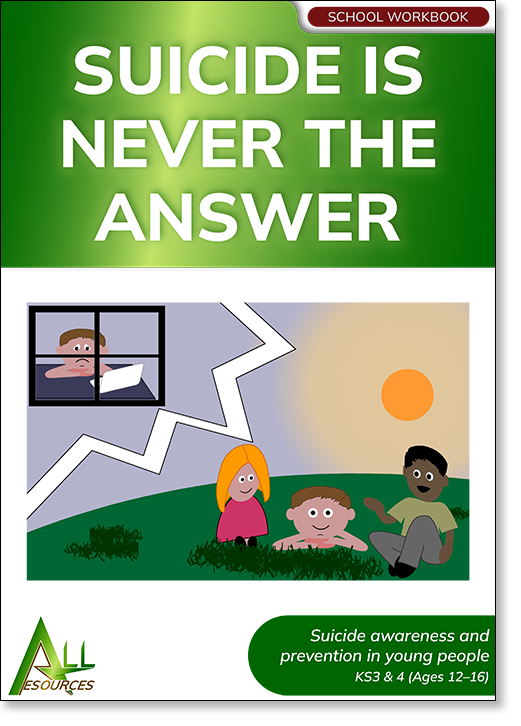
Suicide is Never the Answer
School Workbook
Understand the reasons behind suicidal feelings in young people and recognise the signs to help prevent this tragedy.
- Published: 1999
- Last revised: 2022
- Pages: 44
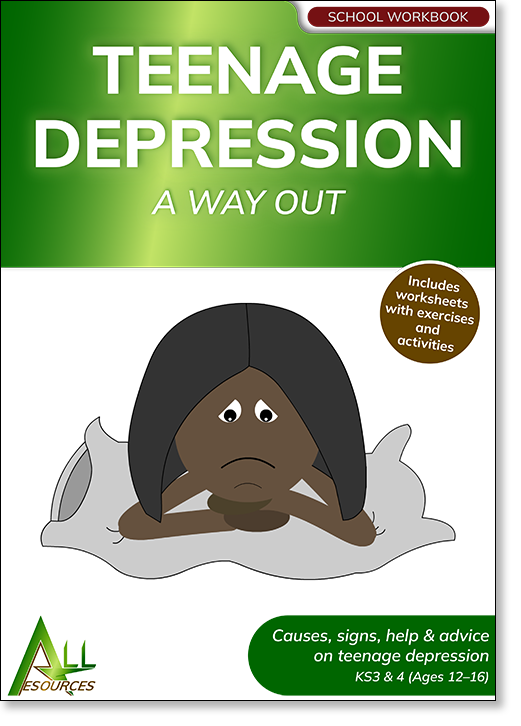
Teenage Depression — A Way Out
School Workbook
Tackles the issue of depression including causes and signs that parents and teachers can look out for.
- Published: 1999
- Last revised: 2022
- Pages: 87
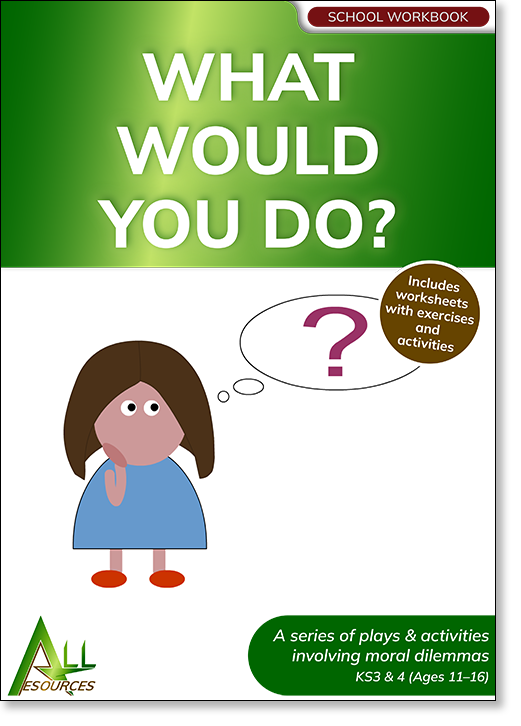
What Would You Do?
School Workbook
A series of plays involving a moral dilemma followed by activities to encourage discussion and further investigation.
- Published: 1999
- Last revised: 2022
- Pages: 46
For the complete list of RSHE changes, refer to the Department for Education documentation.