 Log In
 Register



Anti-Bullying Week is here again and it is a fantastic opportunity for organisations and schools all over the country to examine their anti-bullying policies.
Bullying is a regular form of deliberate behaviour that causes the target physical or emotional distress and can be carried out by an individual or a group over a period of time. In all cases of bullying, somebody suffers physical or emotional distress due to the actions of an individual or a group and the harmful behaviour can continue over a period of weeks, months or even years.
Prevalent Yet Obscure
Incidences of bullying are rarely out of the news — whether it is school bullying or bullying in the workplace. However, it is a difficult area to study because, in many ways, it is a secret activity.
The target of bullying will often refuse to discuss the situation either out of fear of reprisal or because they do not want to be seen as telling tales. They may also feel that nothing will be done about their situation, or the bullying will get worse if they report it.
Someone who witnesses bullying, known as a bystander, may keep silent for the same reasons. However, by turning away and doing nothing, they are allowing the bullying to continue which causes more distress to the person being bullied. It is important that all incidences of bullying are reported as soon as possible.
What is a Bully?
To most people a bully is a powerful person who inflicts physical violence on a weaker person. But bullying does not always involve physical assault and a person who is being bullied does not necessarily have cuts and bruises to prove it.
In most cases the target suffers from verbal abuse which covers a variety of situations including name calling, taunting, verbal threats, demanding money and other forms of intimidation.
Another method of bullying is exclusion — the target is totally ignored and not included in activities with classmates or work colleagues. This can be extremely distressing for the excluded person as they can feel completely cut off.
Cyberbullying
In our technology-driven world, cyberbullying is fast becoming the bullying method of choice. Cyberbullying takes place via text messages, emails, instant messages, online forums, chat rooms, social networks etc. It is becoming more and more common and, because of the anonymous nature of this type of bullying, it can be difficult to trace the person or persons behind it.
Anti-Bullying Week is a chance for all of us to make a stand against bullying and cyberbullying — and in fact any form of verbal and physical violence and hatred.
Read our cyberbullying blog article which looks at this method in more detail and the ways in which you can protect yourself from this form of bullying.
Bullying Resources
Bullying — A Complete Approach
School Workbook
Methods and tips to identify, tackle and prevent bullying.
- Published: 1999
- Last revised: 2022
- Pages: 94
Bullying in the Workplace
Business Handbook
This pack provides guidance for companies on tackling workplace bullying, supporting the targets of bullying and ensuring the wellbeing of staff.
- Published: 2020
- Last revised: 2022
- Pages: 50
Bullying Lesson Plans
Bullying and Cyberbullying
Lesson Plan
Lesson plan exploring how to deal with bullying & cyberbullying, containing handouts for the classroom.
- Published: 2019
- Last revised: 2021
- Pages: 15
Bullying
Lesson Plan
This covers bullying, the types of bullying, the bully, the target and how to tackle bullying.
- Published: 2019
- Last revised: 2021
- Pages: 13
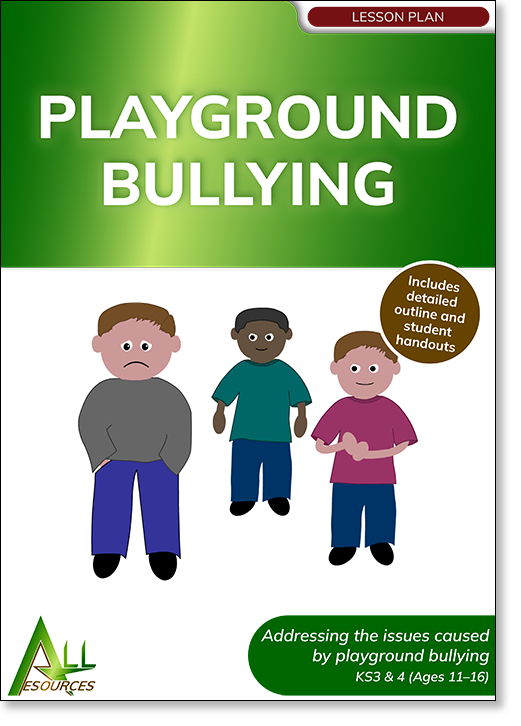
Playground Bullying
Lesson Plan
A lesson plan on playground bullying, the issues caused and addressing the topic.
- Published: 2022
- Pages: 17
Free Bullying Resources