
 Log In
 Register



In a previous blog we examined ways to speak up on school bullying. The impact on mental health and physical wellbeing are very similar to those experiencing bullying at work.
This article is centred around bullying behaviour that is more work-related and explores some methods to combat incidences of bullying and harassment in the workplace.
We seek to address the following questions:
- In what ways does workplace bullying differ from general preconceptions about bullying?
- What are the common types of workplace bullying?
- How do most occurrences of bullying and harassment at work take place?
- What are the effects of bullying on employees?
- How can businesses tackle bullying in practice?
- Fundamentally, how can the silence be broken on workplace bullying?
Employers and HR departments have a duty of care towards the welfare of their workers. Therefore, dealing with workplace bullying is a necessity that requires knowing the types and signs of bullying and having appropriate procedures in place.
How Does Workplace Bullying Differ from Common Opinion?
If you were to ask a group of people to define bullying, you would probably get a broad range of similar answers that line up with what most people think — usually from those that don’t have first-hand experience.
The average person has many preconceived ideas and lot of them probably fall into the realm of myth. For instance:
- It’s only something that happens at school, a part of growing up.
- Kids will be kids, they’re just having ‘harmless fun’ or ‘banter’.
- Bullies are rough people that like to throw their weight around and physically hurt others.
- Bullying targets should man up. They need to stop being so weak and feeling offended all the time.
Sweeping statements like these couldn’t be further from the truth. Although aspects of the above could apply to a few circumstances, most bullying occurrences are nothing like this.
Yes, kids will be kids, but does that make it right to victimise someone? Besides, not all children bully others.
Sometimes bullies are bigger than their target and like to cause physical harm, but this form of bullying is rare in comparison to the most common situations.
The Anti-Bullying Alliance has some great videos on dispelling common bullying myths that are worth checking out.
The fact is, most routine acts of bullying are those that cause some form of emotional and mental torment. Also, over the last decade or so, cyberbullying has greatly overtaken cases of face-to-face bullying in terms of relentless frequency.
Types of Bullying in the Workplace
Before we explore the types of workplace bullying let’s first describe indirect bullying and its characteristics. Indirect bullying will be the main focus of this article, as it often hides behind the majority of workplace bullying incidents.
By nature, indirect bullying is hard to prove which makes it difficult to detect and stamp out. It can perpetrated by any member of staff, including management.
How Does Workplace Bullying Usually Take Place?
Indirect bullying is generally unseen or can be effectuated under the guise of ‘acceptable’ behaviour — usually in a subtle way, with only the target realising it’s happening, even if done in front of other people.
With this in mind, we can connect indirect bullying with common workplace bullying methods, which include:
- Exclusion
- Maliciously disregarding, rejecting or ignoring a person, sometimes excluding them from events altogether. This can happen in break out sessions, brainstorming activities or socially, e.g. during lunch periods.
- Singling Out
- Almost the opposite to exclusion, but done for negative reasons. For example, always giving someone the menial jobs nobody wants to do, especially if those tasks are not part of their main job role. This often overburdens their workload but can be made to look like inclusion or dependability.
- Demeaning Remarks
- This could be unfair critical comments or ridicule to cause belittlement or undermine a person’s decisions or abilities.
- Gossip
- The spread of untrue rumours or outright slander. Online abuse is also a common activity used to harass and intimidate people at work.
- Unrealistic Goal Setting
- Again this can belittle a person and cause undue anxiety and stress.
What Are the Effects of Workplace Bullying?
Although it can be hard to pinpoint and classify workplace bullying, one of the best ways to know if bullying is actually taking place is the way the recipient is made to feel.
Workplace Bullying Affects Mental Wellbeing
People dealing with bullying or harassment regularly suffer with continuous distress and anxiety, without the added pressure that comes with the nature of some jobs.
When bullying is not dealt with, the extra stress can cause someone to take time off for treatment, increasing the workload for others as a result.
In numerous cases, bullying issues are not even raised because people are worried about making their situation worse. Sometimes bullies are close to those in authority and the fear of penalisation or losing their job is enough for some victims to suffer in silence.
Depression is another issue that people frequently experience. It can be brought on by self-doubt and feeling inadequate through many of the actions previously mentioned.
Victimisation methods, like exclusion or spreading harmful gossip, whether online or in person, are among the most prevalent and hurtful actions. Someone feeling depressed by this repetition can spiral into deeper mental health problems.
How Does Bullying Impact Work Performance?
It stands to reason that someone dealing with high levels of stress and worry will not perform optimally at work. Constant criticism and belittling can seriously impact efficiency, which can even make the bully seem justified by their comments!
Underperforming can also snowball if the victim starts to feel incapable or unqualified in their job because of demeaning remarks and ridicule.
What are the Legal Implications of Workplace Bullying?
Most countries have specific laws and regulations when it comes to the physical and mental wellbeing of employees.
In the UK, employers are legally required to provide safe working environments which includes protection from bullying and harassment. (See the Equality Act 2010 for more details.)
The consequences of breaching these regulations can lead to an employee making a constructive dismissal claim against their employer, landing them in serious hot water.
Preventative measures and appropriate procedures for dealing with bullying is, therefore, in the interests of a business as much as it is for those it employs.
Ways to Break the Silence on Workplace Bullying
Breaking the silence about workplace bullying can comprise of various approaches and methods.
It shouldn’t be a topic that is only addressed when it occurs, or once a year during Anti-Bullying Week. It needs to be prioritised with the aim of prevention and developing practical ways to deal with all types of bullying.
Some Ways to Prevent Workplace Bullying
A zero tolerance attitude needs to be instilled, with everyone aware of the ramifications of unacceptable conduct. This can create a relaxed and more productive working environment.
It is important that workable policies and systems are implemented. It’s the responsibility of businesses to inform employees of what to do and who to talk to.
Everyone should be made to feel comfortable when it comes to speaking up about being bullied. Personnel need to be approachable, with an understanding and caring manner. Witnesses and bystanders must also be encouraged to report incidences, with confidence and privacy in view.
Employees require assurances that all issues will be taken seriously and followed through. It is vital that all reports are handled swiftly, efficiently and consistently.
Anti-bullying programmes can be scheduled throughout the work calendar, that involve everyone from the top down. Prevention methods should also feature on meeting agendas, which will allow people an opportunity to raise any ideas or concerns.
Awareness of anti-bullying polices is essential. Procedures need to be revised periodically and followed correctly.
If your company doesn’t already have an anti-bullying policy in place you can use our free template to get started, or use one of the many available online. Involving everyone in the development of policies can benefit the mindset and work ethic of all staff.
Ultimately, tackling workplace bullying means understanding the types of behaviour that should be confronted as well as recognising the signs, many of which are outlined above.
Once identified and dealt with, delays in intervention can be reduced and risks of harm can be mitigated, or eradicated completely through prevention.
If you are looking more information on how bullying affects young people, details of the impact on wellbeing, or how mental health issues can evolve into serious mental disorders, take a look at the rest of this series.
Workplace Bullying Resources
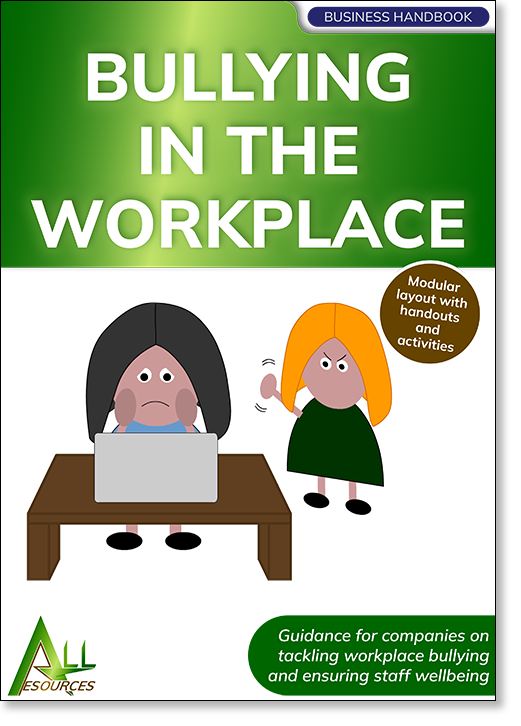
Bullying in the Workplace
Business Handbook
This pack provides guidance for companies on tackling workplace bullying, supporting the targets of bullying and ensuring the wellbeing of staff.
- Published: 2020
- Last revised: 2022
- Pages: 50

Price: £4.19 Now: £1.68
Free Workplace Bullying Resources
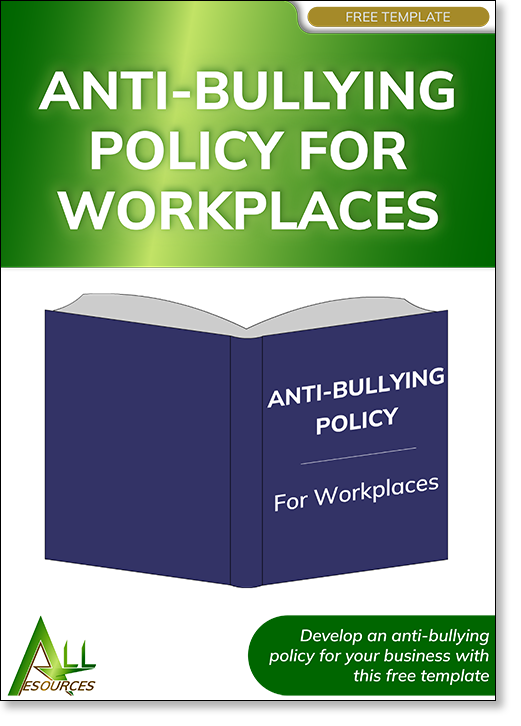
Anti-Bullying Policy For Workplaces
Free Template
A free template to help you develop your own anti-bullying policy for your workplace.
- Published: 2023
- Pages: 8
Free Download